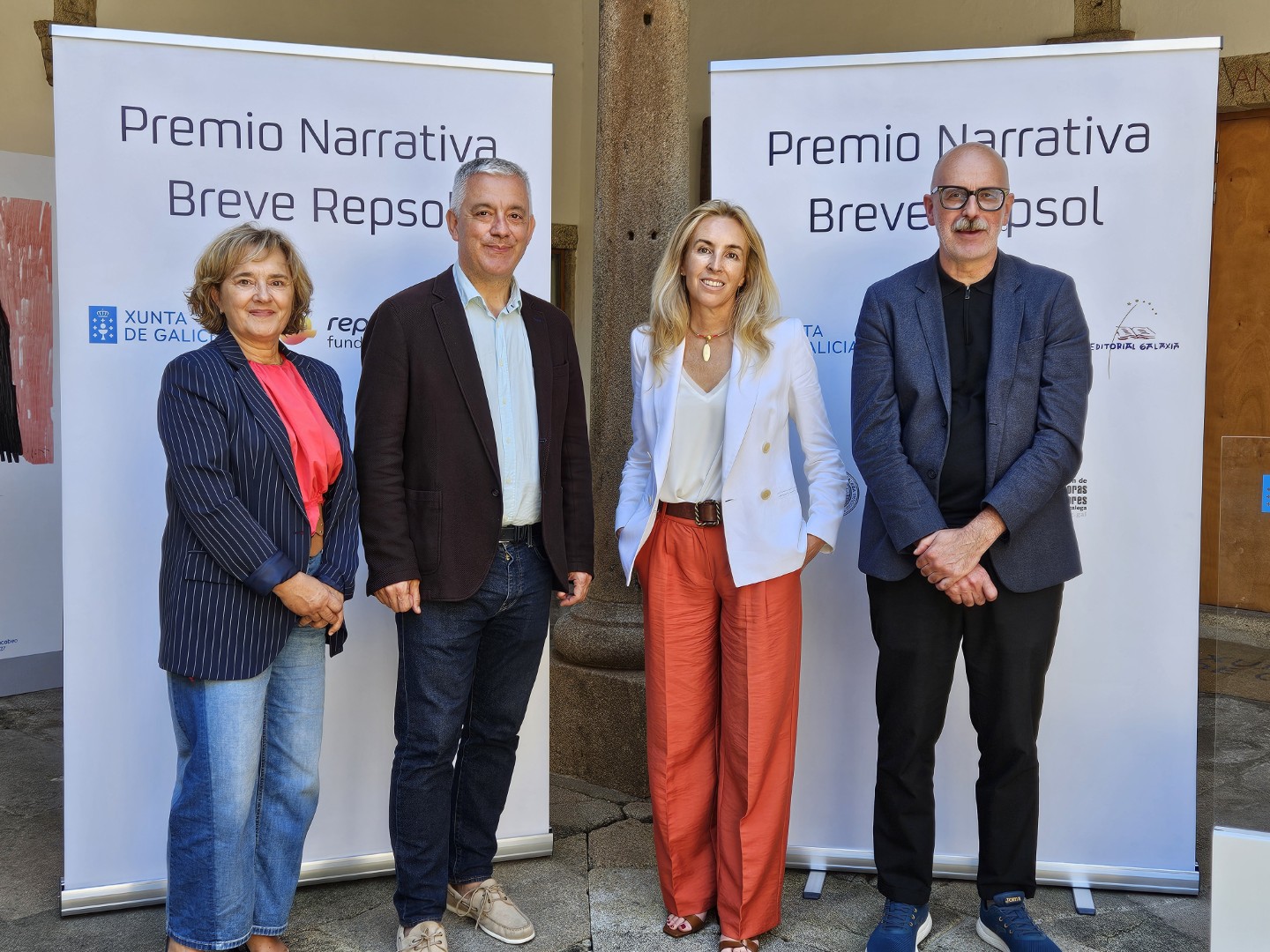
Repsol Fundation launches the Premio Narrativa Breve Repsol with a prize of €15,000

Repsol Foundation, local university, and regional government join forces in Cartagena to create new education and research program
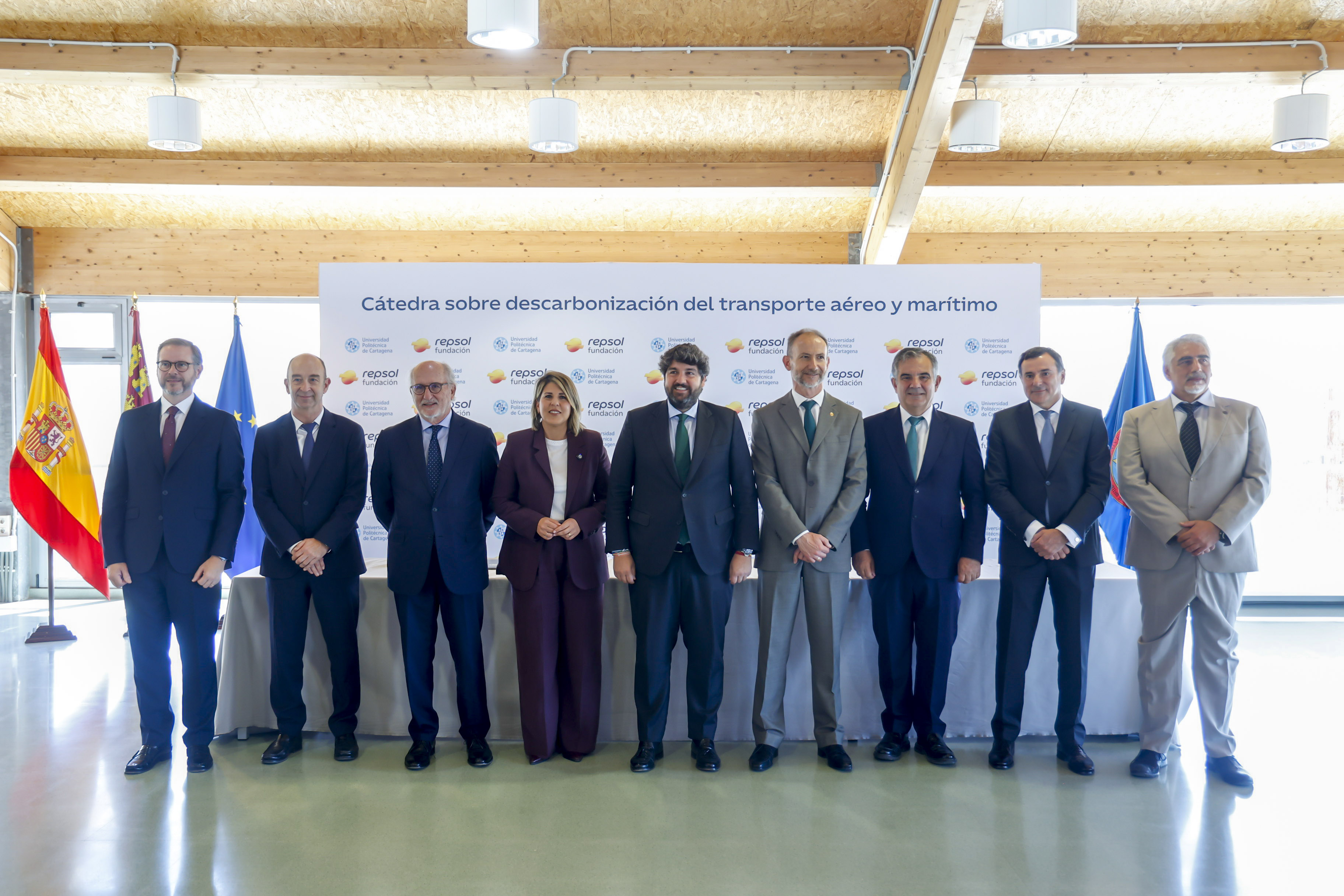
The Repsol Foundation, the Universidad Politécnica de Cartagena (UPCT), and the government of the Region of Murcia have signed a collaboration agreement to promote the generation of knowledge about the energy transition and industrial transformation, with a focus on the circular economy applied to the decarbonization of air and maritime transport in a net zero emissions future.
During the event, the chancellor of the Universidad Politécnica de Cartagena, Mathieu Kessler; Repsol's chairman, Antonio Brufau; and the president of the Region of Murcia, Fernando López Miras; signed a joint institutional statement to support the creation of the new education and research program and strengthen collaboration between the university, industry, and public administrations. The signing of the collaboration agreement between the Repsol Foundation and the UPCT was also attended by the mayor of Cartagena, Noelia Arroyo; the Councillor of the Environment, Universities, Research, and Mar Menor of the Region of Murcia, Juan María Vázquez; the vice chairman and executive managing director of the Repsol Foundation, António Calçada; the director of Repsol's Cartagena Industrial Complex, Rafael Quesada; and the director of the new education and research program, Francisco Vera.
Repsol's chairman, Antonio Brufau, highlighted the link that Repsol and its foundation have forged with the university, research, and knowledge transfer. In this sense, he stressed that this new program "will develop knowledge about the decarbonization of air and maritime transport, and will become an instrument of collaboration to train specialized talent, facilitate the transfer of knowledge, and generate a continuous dialogue between the university and the surrounding industrial ecosystem."
For the chancellor of the Universidad Politécnica de Cartagena, Mathieu Kessler, the addition of Repsol, through its foundation, into the UPCT's network of education and research programs reinforces the historic relationship between the University and the industrial complex in the Escombreras of Cartagena. "Our university was born to respond to the needs of the industrial production and we continue to maintain that same spirit, hand-in-hand with a company that has led innovation and the energy transition for decades," he said.
Kessler also stressed that "much of the highly qualified talent that drives Repsol's industrial complex today has been trained in our classrooms," underlining that the new program will allow us to promote more knowledge, innovation, and training in strategic areas such as the decarbonization of air and maritime transport. "An alliance fully aligned with the UPCT's DNA and with our vocation to contribute to progress and the generation of wealth," he concluded.
López Miras stressed that the new program is part of the Industrial Campus strategy promoted by the regional government within the Region of Murcia's Industrial Plan, aimed at "strengthening the transfer of knowledge, applied innovation, and stable collaboration between universities, technology centers, and industrial production." The Industrial Plan, he insisted, "seeks to consolidate a more innovative, technological industrial ecosystem connected to knowledge and applied research. Among the plan's goals, it includes increasing the weight of private investment in R&D&I from 52% to 58% and increasing the number of collaborative programs between universities and industry.
The director of Repsol's Cartagena Industrial Complex, Rafael Quesada, stressed that "at Repsol we believe in the value of collaborating with the university to anticipate the challenges of the future, train talent, and advance in strategic areas and industrial competitiveness." Quesada added that "the signing of [the agreement for] this program is another step in our collaboration with the university and opens up new ways to continue promoting talent, research, and the development of solutions related to the energy transition." This education and research program joins other means of support that the industrial complex already provides to the university, such as the recent sponsorship of the Reto Fest initiative or the internships of students at the Escombreras Valley facilities.
The education and research program team is chaired by professor Francisco Vera alongside Universidad Politécnica de Cartagena professors Sergio Sanchez, José Hernández, and Alejandro López, all of whom will promote applied research, dissemination, and training activities. The program will take its first steps starting in the 2026–2027 academic year.
About the Decarbonization of Air and Maritime Transport Education and Research Program
The program has been created with the aim of promoting knowledge about the energy transition, with special attention to industrial transformation. Its activity will focus on the study of the circular economy applied to the decarbonization of air and maritime mobility, within the framework of a net zero emissions future.
Its main lines of work include the analysis of the role of renewable fuels, alternative fuels, and other low-emission energy vectors, taking into account their technological, energy, industrial, and regulatory implications.
It will also address the generation of knowledge on solutions aimed at improving energy efficiency and reducing emissions in operations, infrastructures, and logistics chains linked to the port, airport, maritime, and aeronautical sectors. It also promotes the observation, analysis, and transfer of knowledge about the energy transition in aviation and the maritime sector.
Repsol Foundation's network of energy transition education and research programs
The Repsol Foundation works closely with universities in Spain and Portugal through its network of education and research programs to promote knowledge in key areas of the energy transition.
Within the framework of this initiative, it works with universities of recognized prestige in strategic areas such as sustainable mobility (Universidad Politécnica de Madrid), the decarbonization of industry (Comillas Pontifical University ICAI) and of cities (NOVA University Lisbon), hydrogen (Universidad de Navarra), the circular economy (University of the Basque Country), CO₂ capture (Universitat Rovira i Virgili), and renewable fuels (Universidad Carlos III de Madrid).
This network now expands this year with the addition of the University of Castilla-La Mancha, with a line focused on the waste utilization and biomass valorization, and the Universidad Politécnica de Cartagena focused on decarbonization of air and maritime sector transportation.