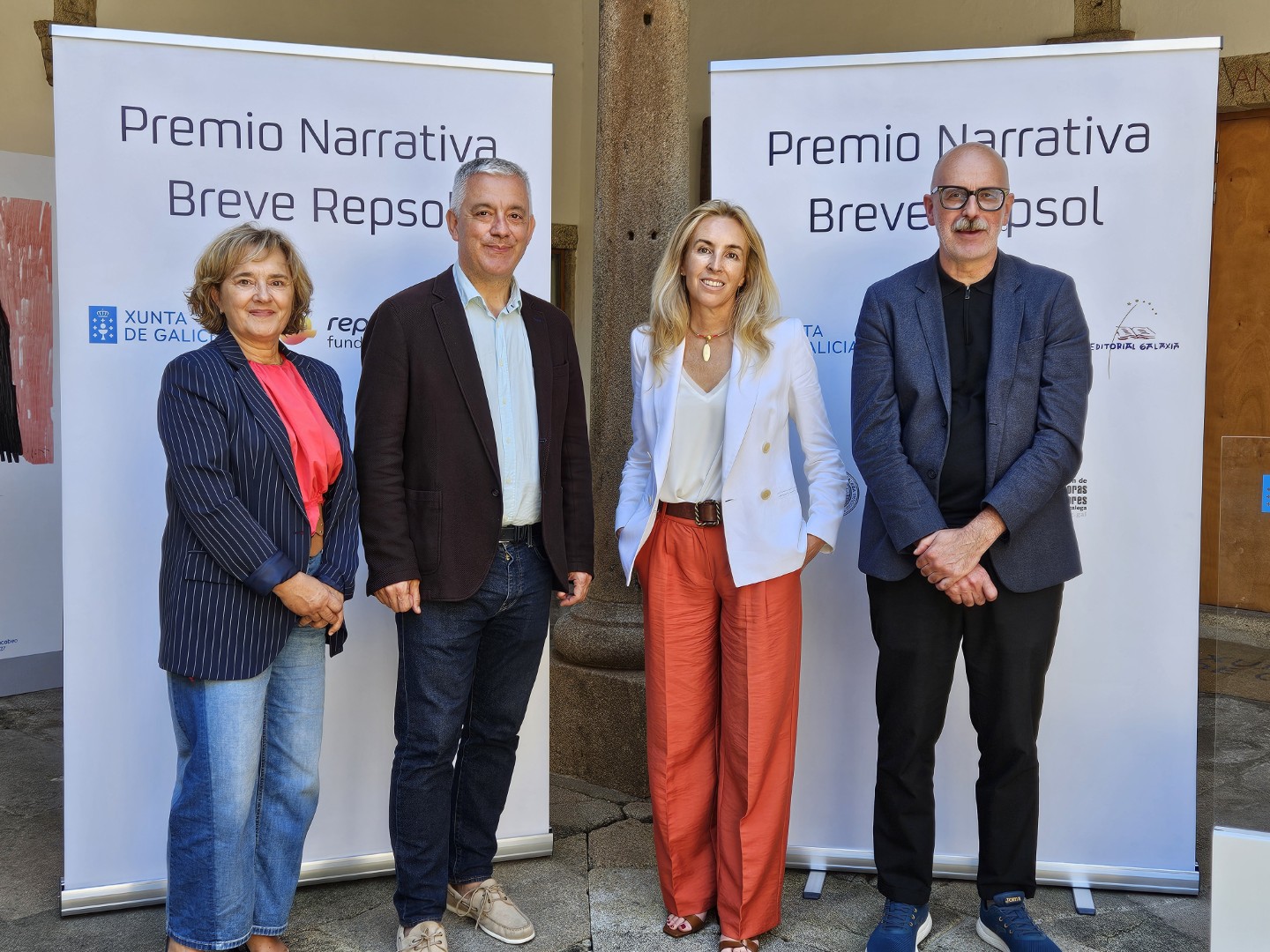
Repsol Fundation launches the Premio Narrativa Breve Repsol with a prize of €15,000

The Repsol Foundation and the University of Castilla-La Mancha present a new education and research program to boost the circular economy
.jpg)
The Repsol Foundation and the University of Castilla-La Mancha (UCLM) today signed a collaboration agreement at the main campus of the University of Castilla-La Mancha (UCLM) in Ciudad Real for the creation of the new Education and Research Program on Waste Utilization and Biomass Valorization, which will boost research, knowledge transfer, and training in key technologies to move towards a circular, low-carbon economy.
The program, led by the professors of chemical engineering Juan Francisco Rodríguez and María Luz Sánchez, will promote applied research, science communication, and training activities aimed at accelerating the development of technological solutions to transform waste into resources, optimize biomass value chains, and analyze their contribution to the decarbonization of industry and the energy system.
The presentation of the agreement was part of a conference organized by the Repsol Foundation and the UCLM to promote dialogue and collaboration regarding waste utilization and the valorization of biomass as levers for the energy transition and industrial competitiveness. Present at the event were Repsol chairman Antonio Brufau; UCLM chancellor José Julián Garde; the Councillor of Sustainable Development of the regional Castilla-La Mancha government, Mercedes Gómez; the Mayor of Ciudad Real, Francisco Cañizares; the Mayor of Puertollano, Miguel Ángel Ruiz; the vice chairman and executive managing director of the Repsol Foundation, António Calçada; Repsol's director of Renewable Fuels and Circular Economy, Tomás Malango; the director of Repsol's Puertollano Industrial Complex, Antonio Lorenzo; and many other guests and experts representing the public administration and the business community.
Repsol's chairman, Antonio Brufau, stressed that biomass and waste "not only reduce emissions" but also boost innovation, generate qualified employment, boost rural areas, and strengthen the competitiveness of sectors such as the chemical, energy, agri-food, or waste management industries. In this regard, he said that Repsol believes that "industry must be part of the solution" and recalled that "the company has adapted its strategy and investments to transform its complexes into multienergy hubs capable of processing raw materials and various kinds of waste, and also of manufacturing products with a low carbon footprint."
At the event's opening, the cancellor of the University of Castilla-La Mancha, José Julián Garde, warned during his speech that "the energy transition is not an option, but an urgent need," hence the new education and research program responds to the "need to move towards a more sustainable energy model" in which "economic growth is compatible with respect for the environment and the well-being of future generations."
Garde stressed that this education and research program has "a deeply territorial dimension" in line with the commitment to regional development that the UCLM assumed since its creation 40 years ago and that will now be reinforced with this new "key" strategic line, in which sustainability and innovation go hand-in-hand from an integrative approach that unites research, teaching, and knowledge transfer.
The regional government's Councillor of Sustainable Development, Mercedes Gómez, congratulated the entities promoting the new program, stressing that the regional government will continue to support the public–private collaboration "key to transforming the resources of Castilla-La Mancha, now focusing on the valorization of waste and the use of biomass, of which we produce around 87,000 metric tons per year, to advance in the decarbonization of the regional productive system and turn it into opportunities for development, employment, and the future."
Antonio Lorenzo, director of the Repsol Industrial Facility in Puertollano, highlighted how collaboration between universities and companies allows the transfer of knowledge and professionals, thus enabling the development of innovative projects in the region by combining research and experience. Repsol's Puertollano Industrial Complex has maintained a permanent cooperation with the regional university for decades. Now, this is manifest in agreements such as this one for new education and research program or the framework collaboration agreement, signed last July between Repsol and the UCLM.
Antonio Lorenzo highlighted how the new renewable fuels plant using plant-based feedstocks, which Repsol will start up in the coming months at the Puertollano Industrial Complex, is a tangible and competitive example of "technological innovation, efficient waste management and industry transformation," all key aspects of the new program.
The day included several roundtable discussions and spaces for the exchange of ideas with speakers from the academic, technological, and industrial fields. The program brought together interventions and debates focused on the potential of waste management and the valorization of biomass to boost innovation, strengthen supply security, and improve the competitiveness of the productive sectors.
About the Education and Research Program on Waste Utilization and Biomass Valorization
The program was created with the aim of promoting the generation of knowledge and the transfer of results in areas such as the circular economy, waste recovery, biofuels, and bioproducts, and the sustainability analysis of biomass-based solutions.
It aims to promote, through the program, a stable space for the generation, knowledge transfer, and communication in the field of the energy transition and, in particular, around the circular economy applied to the use of waste and recovery of biomass, fostering dialogue between researchers, industry, and governments.
In the coming weeks, the program's work plan will be announced, which will include priority lines of research, teaching activities, and meeting forums with agents of the scientific and business ecosystem.
The Repsol Foundation's network of energy transition education and research programs
The Repsol Foundation works closely with universities in Spain and Portugal through its network of education and research programs to promote knowledge in key areas of the energy transition.
Within the framework of this initiative, it works with universities of recognized prestige in strategic areas such as sustainable mobility (Universidad Politécnica de Madrid), the decarbonization of industry (Comillas Pontifical University ICAI) and of cities (NOVA University Lisbon), hydrogen (Universidad de Navarra), the circular economy (University of the Basque Country), CO₂ capture (Universitat Rovira i Virgili), and renewable fuels (Universidad Carlos III de Madrid).
This network now expands this year with the addition of the University of Castilla-La Mancha, with a line focused on the waste utilization and biomass valorization.
The program, led by the professors of chemical engineering Juan Francisco Rodríguez and María Luz Sánchez, will promote applied research, science communication, and training activities aimed at accelerating the development of technological solutions to transform waste into resources, optimize biomass value chains, and analyze their contribution to the decarbonization of industry and the energy system.
The presentation of the agreement was part of a conference organized by the Repsol Foundation and the UCLM to promote dialogue and collaboration regarding waste utilization and the valorization of biomass as levers for the energy transition and industrial competitiveness. Present at the event were Repsol chairman Antonio Brufau; UCLM chancellor José Julián Garde; the Councillor of Sustainable Development of the regional Castilla-La Mancha government, Mercedes Gómez; the Mayor of Ciudad Real, Francisco Cañizares; the Mayor of Puertollano, Miguel Ángel Ruiz; the vice chairman and executive managing director of the Repsol Foundation, António Calçada; Repsol's director of Renewable Fuels and Circular Economy, Tomás Malango; the director of Repsol's Puertollano Industrial Complex, Antonio Lorenzo; and many other guests and experts representing the public administration and the business community.
Repsol's chairman, Antonio Brufau, stressed that biomass and waste "not only reduce emissions" but also boost innovation, generate qualified employment, boost rural areas, and strengthen the competitiveness of sectors such as the chemical, energy, agri-food, or waste management industries. In this regard, he said that Repsol believes that "industry must be part of the solution" and recalled that "the company has adapted its strategy and investments to transform its complexes into multienergy hubs capable of processing raw materials and various kinds of waste, and also of manufacturing products with a low carbon footprint."
At the event's opening, the cancellor of the University of Castilla-La Mancha, José Julián Garde, warned during his speech that "the energy transition is not an option, but an urgent need," hence the new education and research program responds to the "need to move towards a more sustainable energy model" in which "economic growth is compatible with respect for the environment and the well-being of future generations."
Garde stressed that this education and research program has "a deeply territorial dimension" in line with the commitment to regional development that the UCLM assumed since its creation 40 years ago and that will now be reinforced with this new "key" strategic line, in which sustainability and innovation go hand-in-hand from an integrative approach that unites research, teaching, and knowledge transfer.
The regional government's Councillor of Sustainable Development, Mercedes Gómez, congratulated the entities promoting the new program, stressing that the regional government will continue to support the public–private collaboration "key to transforming the resources of Castilla-La Mancha, now focusing on the valorization of waste and the use of biomass, of which we produce around 87,000 metric tons per year, to advance in the decarbonization of the regional productive system and turn it into opportunities for development, employment, and the future."
Antonio Lorenzo, director of the Repsol Industrial Facility in Puertollano, highlighted how collaboration between universities and companies allows the transfer of knowledge and professionals, thus enabling the development of innovative projects in the region by combining research and experience. Repsol's Puertollano Industrial Complex has maintained a permanent cooperation with the regional university for decades. Now, this is manifest in agreements such as this one for new education and research program or the framework collaboration agreement, signed last July between Repsol and the UCLM.
Antonio Lorenzo highlighted how the new renewable fuels plant using plant-based feedstocks, which Repsol will start up in the coming months at the Puertollano Industrial Complex, is a tangible and competitive example of "technological innovation, efficient waste management and industry transformation," all key aspects of the new program.
The day included several roundtable discussions and spaces for the exchange of ideas with speakers from the academic, technological, and industrial fields. The program brought together interventions and debates focused on the potential of waste management and the valorization of biomass to boost innovation, strengthen supply security, and improve the competitiveness of the productive sectors.
About the Education and Research Program on Waste Utilization and Biomass Valorization
The program was created with the aim of promoting the generation of knowledge and the transfer of results in areas such as the circular economy, waste recovery, biofuels, and bioproducts, and the sustainability analysis of biomass-based solutions.
It aims to promote, through the program, a stable space for the generation, knowledge transfer, and communication in the field of the energy transition and, in particular, around the circular economy applied to the use of waste and recovery of biomass, fostering dialogue between researchers, industry, and governments.
In the coming weeks, the program's work plan will be announced, which will include priority lines of research, teaching activities, and meeting forums with agents of the scientific and business ecosystem.
The Repsol Foundation's network of energy transition education and research programs
The Repsol Foundation works closely with universities in Spain and Portugal through its network of education and research programs to promote knowledge in key areas of the energy transition.
Within the framework of this initiative, it works with universities of recognized prestige in strategic areas such as sustainable mobility (Universidad Politécnica de Madrid), the decarbonization of industry (Comillas Pontifical University ICAI) and of cities (NOVA University Lisbon), hydrogen (Universidad de Navarra), the circular economy (University of the Basque Country), CO₂ capture (Universitat Rovira i Virgili), and renewable fuels (Universidad Carlos III de Madrid).
This network now expands this year with the addition of the University of Castilla-La Mancha, with a line focused on the waste utilization and biomass valorization.
%20(Mediana).jpg)