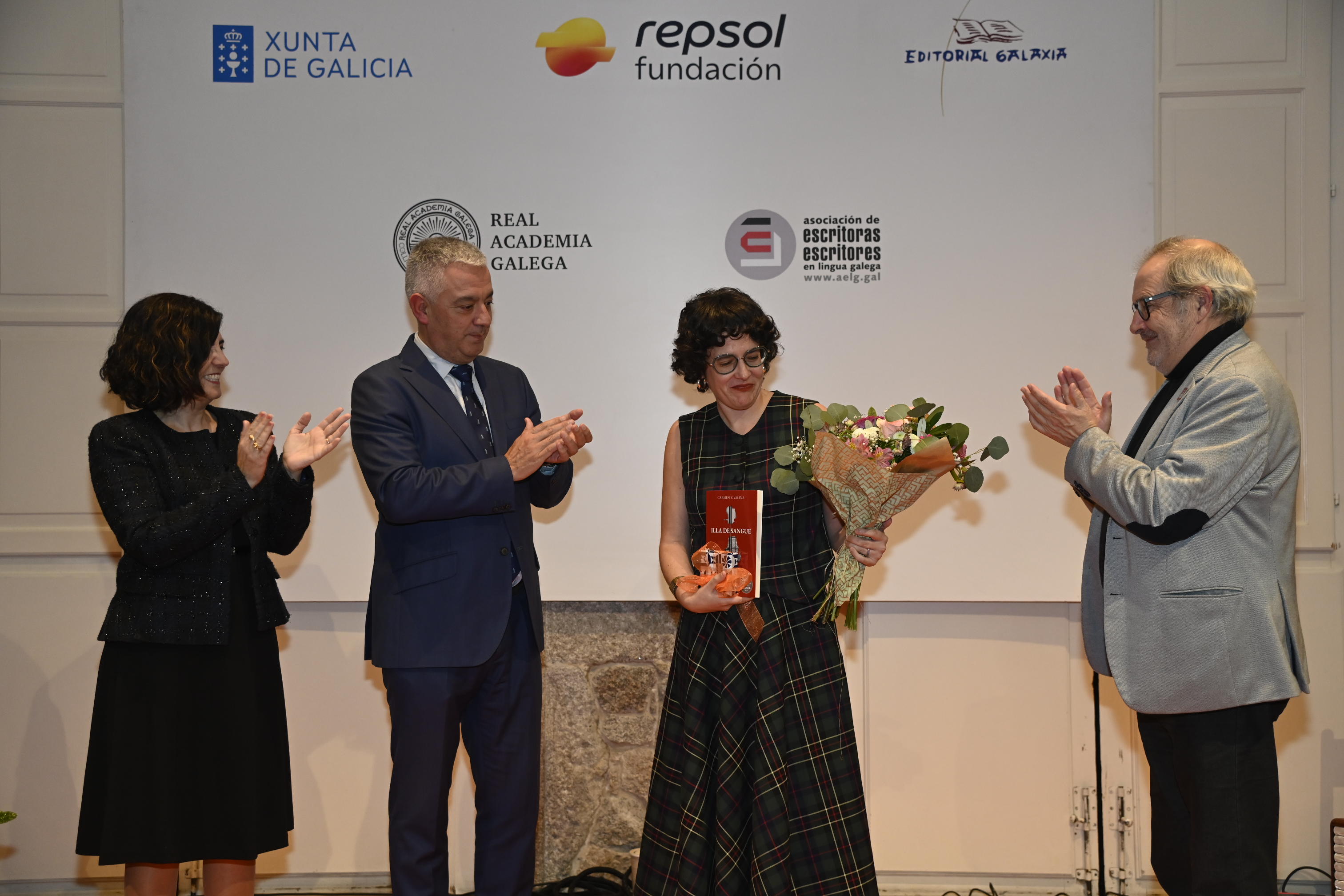
Carmen V. Valiña Wins Repsol Short Story Award with "Blood Island"

Antonio Brufau analyzes how industrial decarbonization can boost the competitiveness and economic development of the Iberian Peninsula at Repsol.
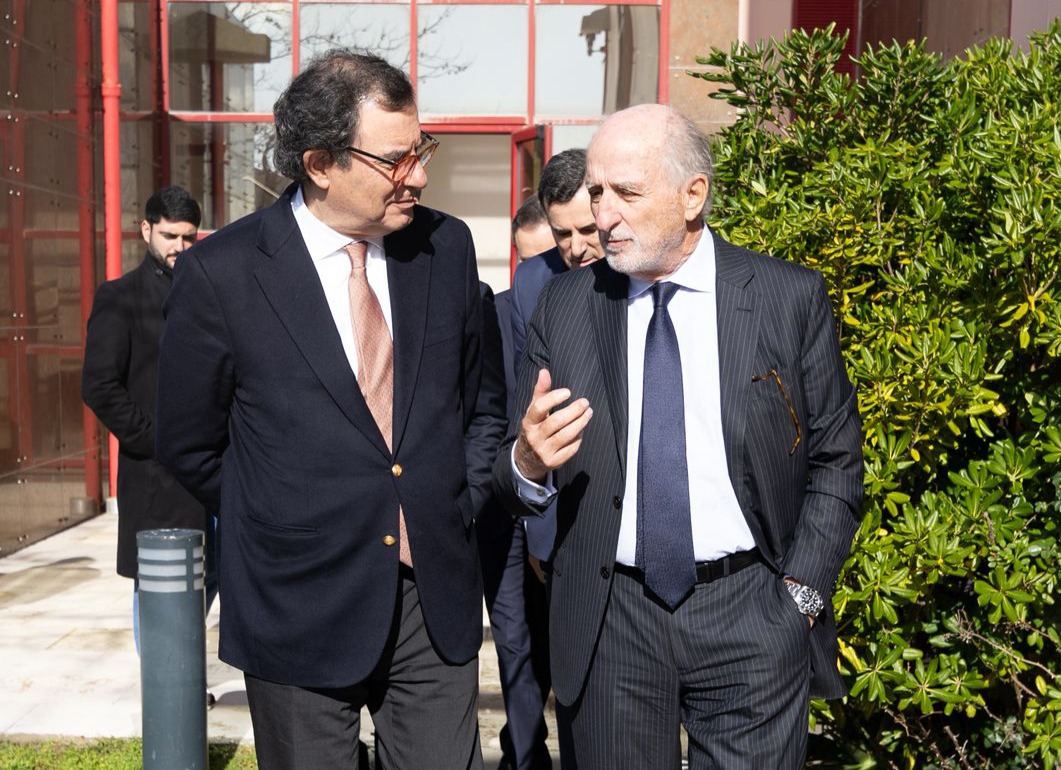
The Repsol chairman participated in the conference "Towards Net Zero: Sines and the pathways to industrial decarbonization" held in Sines in which the Minister of Economy and Territorial Cohesion of Portugal, Manuel Castro Almeida, also participated.
Today in the Auditorium of the Administration of the Port of Sines and the Algarve (Portugal), the conference organized by the Repsol Foundation "Towards Net Zero: Sines and the pathways to industrial decarbonization" was held, attended by the Minister of Economy and Territorial Cohesion of Portugal, Manuel Castro Almeida, and Repsol chairman, Antonio Brufau.
"It is Portugal - and the Portuguese Government - that must thank Repsol for the decision to invest and trust in our country, an investment of national interest that deserves full recognition," said Manuel Castro Almeida, Minister of Economy and Territorial Cohesion of Portugal, at the closing of the event.
The Repsol chairman underlined that the "decarbonization of industry and the competitiveness of companies” represent a great opportunity for economic development for the Iberian Peninsula, but also a great challenge that requires knowledge, strategy, technology, and pragmatism. "In a current scenario of uncertainty, it is essential to protect industry and employment in Europe, committing to a regulatory framework that encourages innovation and investments linked to the energy transition," he stressed.
During the session, the strategic role of Sines as a key industrial and energy center for the European energy transition was discussed.
At the conference, the relevance of Sines in the energy landscape was underlined. "We are facing a historic opportunity: to transform a consolidated industrial core into an innovative, competitive, and sustainable ecosystem, aligned with the carbon neutrality goals for 2050," said Repsol Foundation executive managing director António Calçada.
During the morning, Repsol's path to carbon neutrality by 2050 was also discussed in a dialogue with Juan Abascal, the company's executive managing director of Industrial Transformation, followed by a round table on Sines' strategic roadmap.
The event was also attended by the Minister of Economy and Territorial Cohesion, Manuel Castro Almeida, the president of the Municipal Chamber of Sines, Álvaro dos Santos Beijinha, the president of the Municipal Chamber of Santiago do Cacém, Bruno Gonçalves Pereira, Repsol chairman, Antonio Brufau, the chairman of Infrastructures of Portugal, Miguel Cruz, and the COO of Start Campus, among other representatives from the public and private sectors.
Manuel Castro Almeida, Minister of Economy and Territorial Cohesion, said at the end of the event that "it is Portugal - and the Portuguese Government - that must thank Repsol for the decision to invest and trust in our country, an investment of national interest that deserves full recognition. I join this initiative, which reinforces Sines' role as a unique investment destination, due to the nature of its port, the size of its industrial platform, and the complementarity between companies, with energy being an increasingly differentiating factor."
The Repsol chairman mentioned the Draghi and Letta reports, which highlight "the loss of competitiveness and the deterioration of European industry." "In a world, as we are seeing, in which geopolitical risks can rapidly alter markets and value chains, Iberian industrial competitiveness will depend on both smart energy policies and a framework that integrates energy security with technological innovation and decarbonization," highlighted Antonio Brufau.
At the end of the conference, the Minister of Economy, accompanied by the Repsol chairman, visited the industrial complex to oversee the progress of the Alba Project, an investment of 657 million euros classified as a Project of National Interest (PNI).
After the closing of the conference, the Minister of Economy, accompanied by the Repsol chairman, the ambassadors of Portugal and Spain, the Secretary of State for the Economy, and other authorities, visited the industrial complex to oversee the progress of the Alba Project, the largest industrial investment in Portugal in the last decade.
The delegation also visited the renewable energy infrastructures that support the decarbonization of the facility, including the location of the largest electrolyzer approved by Repsol in Portugal for the production of renewable hydrogen, as well as the photovoltaic plant.
Repsol thus reaffirms its role as one of the largest pillars of the Portuguese economy, ranking in the TOP 10 of the largest companies by turnover and being one of the main exporters to more than 50 countries. With more than 1,300 direct employees in Portugal, the company continues to expand its multi-energy strategy, which already includes 100% renewable fuels at 71 service stations and biodiversity projects such as Green Engine + Forest, among others.